What Makes Office Pods a Smart Investment Today
Open-plan offices democratized space, but they also amplified noise, distractions, and a constant sense of exposure. Office pods restore balance by creating intentional zones of quiet, comfort, and control without the permanence or expense of building new rooms. These enclosed micro-environments deliver acoustic privacy and visual separation so employees can focus, take calls, or collaborate without broadcasting every conversation to the floor.
In an era of hybrid work, the office must earn the commute. Pods help achieve that by offering purposeful destinations: a phone booth for a quick client call, a two-person pod for confidential 1:1s, or a larger pod for sprint planning. Instead of overbooked boardrooms and improvised hallway huddles, teams get fit-for-purpose spaces that actually match the task at hand. The result is fewer interruptions, more deep work, and a calmer baseline for the entire office.
From a financial standpoint, pods are a strategic alternative to construction. They are treated as furniture in many jurisdictions, allowing faster approvals and easier reconfiguration. When a department grows or a floorplan changes, pods move with the organization—no demolition, patching, or costly downtime. This spatial agility keeps real estate aligned with evolving business needs while avoiding sunk costs in fixed walls.
Pods also play a direct role in talent attraction and retention. Employees consistently rank quiet space and well-being among top workplace needs. High-quality ventilation, lighting tuned for long sessions, and ergonomic furnishings support healthier work habits. And because pods establish clear behavioral cues—door closed means “heads down,” soft light means “in session”—they reduce social friction on busy floors. When implemented at scale, these micro-sanctuaries boost measurable outcomes: shorter time-to-focus, fewer rescheduled calls, and higher satisfaction scores on post-occupancy surveys. In short, office pods solve the everyday frictions of modern work with simple, human-centered environments.
Design Essentials: Acoustics, Comfort, and Technology That Matter
Not all pods are created equal. The most effective models combine materials, engineering, and thoughtful details to produce real results. Start with acoustics: look for tested sound reduction ratings validated by independent labs. True acoustic performance relies on dense wall construction, sealed door systems, and multi-layer glazing that limit flanking paths. When a pod blocks both outbound and inbound noise, it protects confidentiality and reduces disruption to neighbors.
Next, prioritize airflow and thermal comfort. A great pod refreshes air quietly and frequently, exchanging the entire volume multiple times per hour without creating drafty cold spots or fan noise. Discreet intake and exhaust channels, paired with low-sone fans, keep oxygen levels steady during long sessions. Thoughtful lighting is equally critical: high color rendering, glare control, and adjustable brightness support everything from video calls to heads-down writing. Integrated occupancy sensors can automate both ventilation and lighting to conserve energy between uses.
A pod should work like a miniature room. That means robust power and data: tamper-resistant outlets, USB-C charging, and cable management that keeps surfaces clean. For collaboration pods, consider displays with VESA mounts, camera shelves at eye level, and acoustic treatments that preserve natural vocal tone on calls. Hardware should be serviceable, with replaceable fans, door seals, hinges, and panels to extend the product lifecycle and reduce waste.
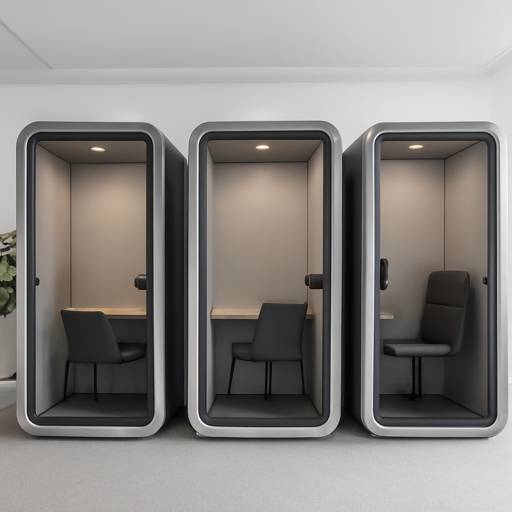
Ergonomics shapes the user experience. Standing ledges are excellent for short calls, while stools or benches with lumbar support serve longer sessions. Table depth should comfortably fit a laptop, notebook, and microphone without crowding. For accessibility, door widths, floor thresholds, and interior clearances matter—designs that anticipate mobility devices make the workplace more inclusive. Sustainable materials, low-VOC finishes, and recyclable components reinforce environmental commitments without compromising durability.
Finally, evaluate installation and scalability. Modular construction allows rapid deployment with minimal disruption; consider models that pass through standard doorways and assemble on-site. A stable base, discreet leveling feet, and secure cable routing keep the footprint clean. When these fundamentals are right, pods become a quiet backbone of the floorplan—always available, always comfortable, and always consistent.
Planning Playbooks and Real-World Wins with Premium Pods
Effective pod strategies begin with a simple audit: what activities are most blocked by noise or a lack of privacy? Typical patterns emerge quickly. Sales teams need phone booths for rapid outreach; product groups want two- to four-person pods for agile ceremonies; leadership requires quiet zones for sensitive discussions. A zoned mix—for example, two phone pods per 20 open desks, one two-person pod per 30 desks, and a larger collaboration pod per 50—supports core workflows without over-allocating enclosed rooms.
In one fast-scaling technology firm, introducing phone booths near SDR clusters reduced call deferrals by 35% and improved daily dial counts by double digits. Meanwhile, a financial services team replaced a rarely used boardroom with three small pods, cutting meeting wait times and reclaiming prime windows for open collaboration. In coworking, pods have proven to increase day-pass conversions; clear access to quiet calling space removes a top barrier for trial users considering monthly memberships.
Premium solutions stand out when the details align with operational needs. Cepheus premium office pods—exclusively manufactured as a focused product line—are engineered around the core metrics companies care about: verifiable acoustic attenuation, quiet yet powerful ventilation, crisp lighting for camera-ready calls, and dependable power delivery. Cleanable, durable finishes support heavy daily use, while repairable components extend service life and minimize waste. This singular focus on pod excellence ensures consistent quality across single-user phone booths and multi-person collaboration formats.
Space planners often deploy pods in clusters near team neighborhoods rather than hiding them in corridors. This proximity encourages spontaneous use and minimizes “travel time” to quiet. Placement near—but not inside—traffic paths reduces pass-by noise. Orientation matters too: positioning doors away from main aisles and adding subtle frosted bands to glazing preserves psychological privacy without cutting off ambient light. Usage data then refines the mix; when phone booths hit over 60% peak utilization, add more single-user units before investing in additional large pods.
For organizations seeking a trusted reference point, explore Cepheus office pods to see how premium construction, modular scalability, and human-centered design coalesce into environments that truly support modern work. When pods are built with this level of intent and rigor, the office benefits extend beyond noise control: meetings run on time, schedules stabilize, and teams can protect the high-focus hours that drive performance. In practical terms, that means faster project cycles, cleaner sales pipelines, and a workplace that finally matches the way people actually work.