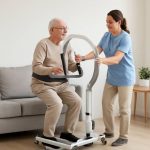
For millions of individuals recovering from surgery, managing chronic conditions, or simply experiencing the natural effects of aging, the simple act of standing up from a chair or bed can feel like an impossible mountain. Caregivers often bear the physical and emotional weight of these transfers, risking injury and burnout. Enter the sit to stand lift for home use: a device engineered not just to move a person from point A to point B, but to restore dignity, safety, and a sense of control within the familiar walls of home. Unlike full-body sling lifts, these devices are designed for patients who can bear some weight on their legs and have some upper body strength. They provide a stable pivot point, allowing the user to actively participate in the transfer. This is not about passive lifting; it is about supported movement. The result is a profound shift in daily living, reducing caregiver strain by up to 60% and offering the user a path toward rehabilitation rather than mere dependence. When standing transfers become a natural, secure part of the routine, the home environment transforms from a place of risk to a sanctuary of possibility.
Why a Sit to Stand Lift Is Essential for Home Recovery and Safety
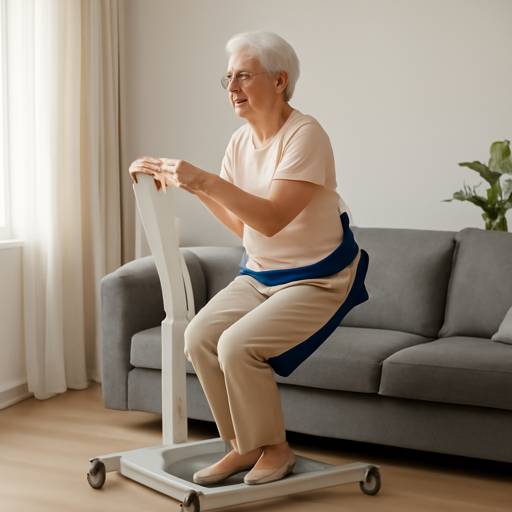
The home is not designed like a hospital. Hallways are narrower, bathrooms lack mechanical lifts, and furniture is often too low for safe standing transfers. Yet the need for safe mobility at home is arguably more critical than in a clinical setting because there is no nursing call button within arm's reach. A sit to stand lift addresses this gap head-on. It operates by positioning a padded support behind the user’s knees and a chest pad against the torso. As the lift gently rises, it mimics the natural motion of standing, distributing the user's weight evenly through their legs and the lift's frame. This controlled motion is critical for fall prevention, as unassisted standing attempts from a seated position are among the most common causes of hip fractures and head injuries in the elderly. The device effectively eliminates the hazardous "leaning and grabbing" that often leads to toppling. For caregivers, the ergonomic benefit is transformative. Instead of bending, twisting, and bearing a full adult’s weight, the caregiver simply operates the lift’s hand control. The lift does the heavy lifting. This drastically reduces the incidence of back injuries, which plague the home care industry. Furthermore, a sit to stand lift for home use actively engages the user’s leg muscles. This partial weight-bearing is vital for maintaining muscle tone, improving circulation, and preventing joint stiffness. It supports a rehabilitation mindset: every transfer becomes a small exercise rather than a passive event. Studies in physical therapy journals consistently show that patients who use sit-to-stand devices in home care recover functional mobility faster than those who rely on full sling lifts or manual assistance alone.
Beyond the mechanics, there is a psychological component that cannot be overstated. Humans are wired to stand. Being unable to rise independently can lead to feelings of helplessness, depression, and social withdrawal. A sit to stand lift combats this by offering a pathway to self-initiated movement. With proper setup, many users can operate the lift themselves using a remote, giving them the autonomy to stand when they choose. This is not merely a convenience; it is a restoration of agency. For families, the presence of a reliable lift reduces the fear of leaving a loved one alone. It provides peace of mind, knowing that the user can still get to the bathroom or the living room without waiting for someone to physically haul them up. In many home scenarios, the lift bridges the gap between wheelchair and toilet, wheelchair and bed, or wheelchair and favorite armchair. It becomes an essential piece of furniture rather than an intimidating piece of medical equipment. When selecting a device, look for features like adjustable knee pads, non-slip footplates, and a base that fits under standard beds. The goal is seamless integration into the existing home environment, not a disruption of it.
Real-World Application: Case Studies in Home Use and Technology Integration
To understand the true impact of these lifts, consider the story of Margaret, a 78-year-old woman recovering from a hip replacement. Her home had a split-level layout, and the only bathroom was upstairs. Her daughter, a part-time caregiver, struggled for weeks with manual transfers until they installed a sit to stand lift for home use. Within days, Margaret could independently transfer from her bed to a rolling commode, then to a chair. Her confidence returned, and she began performing her prescribed physical therapy exercises more consistently. The lift did not just aid her mobility; it accelerated her rehabilitation timeline by allowing her to practice standing multiple times a day without fear. In another case, John, a 65-year-old with progressive multiple sclerosis, used a sit-to-stand lift to avoid a full-time nursing home admission. His wife could no longer lift him manually, but the lift enabled her to assist him in getting out of bed and into his wheelchair. The key was the lift’s low-entry base, which slipped under their low-profile bed frame. John’s muscle strength declined less rapidly because he continued to bear weight during transfers, a critical factor in slowing the progression of his condition. These examples highlight a crucial subtopic: the integration of these lifts with other home accessibility equipment. For instance, combining a sit-to-stand lift with a ceiling track system in a bedroom or bathroom can create a comprehensive transfer solution. Or pairing the lift with a height-adjustable bed ensures that the user can move from mattress to lift seat at the optimal angle.
Another important consideration is the evolving technology in these devices. Modern sit-to-stand lifts now incorporate digital weight sensors that can alert caregivers to sudden weight changes (a possible sign of a fall or instability), as well as battery life indicators that prevent mid-transfer power loss. Some models offer memory foam padding on the knee and chest supports, which reduces pressure sores during prolonged transfer times. A real-world example from a home health agency in Ohio showed that introducing these lifts to a cohort of 100 home care patients reduced caregiver injury claims by 44% over 12 months. The agency’s director noted that the biggest barrier was initially the perception that the lift was too complicated. After a single training session, families realized it was simpler than a high-end exercise machine. For patients with bariatric needs, manufacturers now produce models with weight capacities of 400 to 600 pounds, featuring wider bases and reinforced frames. These units are often battery-powered, allowing them to be used even during power outages—a crucial feature for home use in rural areas or storm-prone regions. Ultimately, the sit-to-stand lift is not a one-size-fits-all solution, but the principle remains the same: it enables safe, active standing in the home environment, reducing institutional placements and improving quality of life for both users and caregivers.
Choosing the Right Model: Weight Capacity, Portability, and Fit
Selecting the ideal sit to stand lift for home use requires matching the device to the specific needs of the user and the layout of the home. The first factor is weight capacity. Standard home lifts typically support between 300 and 400 pounds, but heavy-duty models exist for users over that threshold. Do not guess—consult the user’s current weight plus any extra load from clothing or medical accessories. The second factor is portability. Many families need to move the lift between rooms, or even take it on trips. Models with folding frames and removable battery packs weigh as little as 40 to 50 pounds and can fit into the trunk of a car. Others have locking casters that allow easy rolling on hardwood or laminate floors but can be a hazard on thick carpet. For homes with wall-to-wall plush carpet, look for lifts with larger wheels (at least 3 inches) and a low-profile base that does not tip easily. The third factor is room clearance. Measure the width of doorways (standard is 32 inches, but some older homes have 30-inch doors). The lift’s base must fit without scraping the trim. Also measure the height of the bed or chair where the lift will be used. Some lifts require a minimum clearance of 4 inches underneath to slide the footplate. For toilet transfers, the lift must be positioned so the user can pivot without hitting the sink or bathtub. Many lifts now offer a 360-degree swivel seat on certain models, which is particularly beneficial for tight bathroom configurations. Finally, consider battery life. A typical home session of five to ten transfers per day should last a full week on a single charge. Choose a model with a LED indicator that shows remaining power. Investing in a second battery eliminates the worry of being stranded mid-transfer. With these considerations addressed, the lift becomes not just a tool, but an extension of the user’s own capabilities—a partner in the daily dance of getting up and moving forward.