The demands of patient care, whether in a professional healthcare setting or a private home, place immense physical strain on caregivers. One of the most hazardous tasks remains the manual transfer of a patient from a seated to a standing position. This is where specialized equipment transforms the process. A sit to stand lift is not merely a convenience; it is a critical tool designed to bridge the gap between full dependence and assisted mobility. Unlike a total body sling lift, these devices are engineered for patients who can bear some weight on their legs and possess some trunk control. The device provides a stable pivot point, allowing the patient to stand with the lift supporting a significant portion of their body weight. This process preserves the patient’s dignity by encouraging active participation in the transfer while drastically reducing the shear force and manual lifting burden on the caregiver. For facilities aiming to meet OSHA guidelines and reduce worker compensation claims, or for families looking to extend the independence of a loved one at home, understanding the nuances of a sit to stand lift for sale is the first step toward a safer, more functional environment.
Understanding the Mechanics and Benefits of a Sit to Stand Lift
To appreciate the value of a sit to stand lift, one must first understand its distinct mechanism. These devices typically consist of a sturdy wheeled base, a vertical mast, and a pivoting or articulating arm that holds a specially designed sling or vest. The sling is positioned around the patient’s back and under their arms, leaving the legs free. As the lift activates—often via a hydraulic pump or an electric actuator—the arm raises, pulling the patient forward and upward into a standing position. This movement mirrors the natural biomechanics of standing, requiring the patient to engage their core and lower body muscles. This active participation is crucial for rehabilitation. It prevents muscle atrophy and maintains joint flexibility, which passive lifting cannot achieve. For the caregiver, the benefit is immediate and measurable. The lift eliminates the need to perform a deep squat or to bear the brunt of the patient’s weight during the most stressful part of the transfer. Instead, the caregiver’s role shifts to guiding the lift, positioning the patient’s feet, and ensuring the sling is secure. This reduction in caregiver strain is the primary driving force behind the growing market for these devices. Furthermore, these lifts offer incredible versatility. Many models feature a spreadable base that can be opened to accommodate wheelchairs and closed to navigate through standard doorways. The leg rests are often adjustable, and the knee pads provide a crucial pivot point that prevents the patient from sliding forward. When searching for a sit to stand lift for sale, it is vital to consider the weight capacity and the range of motion. Higher-end units offer smooth, battery-powered operation that allows for transfers without a nearby electrical outlet, increasing the device’s utility across different rooms and care environments. The integration of safety features, such as emergency stop buttons and manual lowering systems, ensures that even in the event of a power failure, the patient can be safely returned to a seated position.
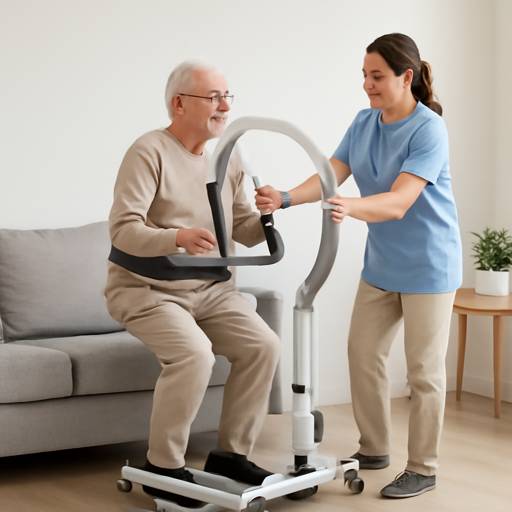
Key Features to Evaluate When Searching for a Sit to Stand Lift for Sale
Not all sit to stand lifts are created equal, and the specific needs of the patient and the environment will dictate which features are non-negotiable. The first and most critical factor is the patient weight capacity. Standard units usually support between 350 and 500 pounds, but bariatric models are available for patients requiring higher capacity. Exceeding the lift’s limit is a safety hazard that cannot be ignored. Next, consider the base spread. A wide, stable base is essential for balance during the lift, but it must be narrow enough to fit under a standard bed or around a toilet. The best models offer an easy-to-operate, foot-controlled widening mechanism that allows the caregiver to adjust the base without bending over. The battery system is another major differentiator. Sealed lead-acid batteries are common and reliable, but lithium-ion batteries offer faster charging times and longer life cycles, which is a significant advantage in a busy facility. The control system, whether a hand pendant or a push-button control on the mast, should be intuitive and easy to clean. The sling design also deserves careful attention. Most lifts use a divided leg sling or a full vest. A divided leg sling provides more support for patients with good trunk control, while a vest is better for those who need more upper body stabilization. Look for slings made of breathable, washable mesh material to promote hygiene and comfort. When you are ready to purchase a sit to stand lift for sale, it is wise to source equipment from reputable medical supply companies. One reliable source for high-quality models is this sit to stand lift for sale collection, which offers a range of options designed for both durability and ease of use. Ultimately, the best lift is one that aligns with the caregiver’s physical capabilities and the patient’s specific mobility level. A unit that is too complex to operate will be avoided, while one that is too rudimentary may not provide adequate support. Testing the lift with the intended user, if possible, is the most effective way to ensure compatibility.
Real-World Applications: How Facilities Successfully Integrate Sit to Stand Lifts
The theoretical benefits of a sit to stand lift become concrete when examined through real-world implementation. Consider a skilled nursing facility in Ohio that faced a crisis of staff turnover directly linked to back injuries. Before introducing a fleet of sit to stand lifts, the facility relied on manual lifting teams of two or three staff members for every transfer. This led to chronic injuries and worker burnout. After a comprehensive risk assessment, they purchased ten new sit to stand lifts and mandated their use for all patients classified as “partial weight-bearing.” The results were dramatic. Within six months, the facility reported a 70% reduction in reportable lifting injuries among nursing staff. Furthermore, patient satisfaction scores increased. Residents reported feeling more independent and less like passive objects being moved. The lifts allowed them to stand and pivot with dignity, which had a positive psychological impact alongside the physical benefits. Another case study involves a home care agency in a suburban area. They worked with a 78-year-old patient recovering from hip replacement surgery. The patient’s spouse, also in his 80s, was the primary caregiver. The risk of the spouse injuring himself was extremely high. The agency prescribed a portable sit to stand lift. The compact, foldable design meant it could be stored in a closet when not in use, respecting the home’s layout. The caregiver reported that the lift gave him the confidence to assist his wife without fear. The presence of the lift reduced caregiver anxiety and allowed the patient to stay at home rather than moving to a rehabilitation facility. These examples highlight a key truth: the value of a sit to stand lift extends far beyond the physical act of lifting. It reshapes the entire care dynamic. In a hospital setting, these lifts expedite discharge planning by facilitating early mobility. Patients are able to get out of bed sooner, which reduces the risk of pneumonia and deep vein thrombosis. The integration of these devices requires training, but the investment in that training pays immediate dividends in employee retention and patient outcomes. For any organization or family considering a purchase, these case studies provide compelling evidence that the upfront cost is an investment in long-term safety and quality of life.